
• Skip to main content
  • Skip to primary sidebar
CaliGirl Cooking
menu icon
go to homepage
search icon
Homepage link
  • Home
  • About
  • Recipes
  • Kids & Baby
  • Shop My Amazon Store
  • Contact
×
Home » Ice Cream and Sorbets » Banana, Peanut Butter, Dark Chocolate Chip “Faux”-Yo

Banana, Peanut Butter, Dark Chocolate Chip “Faux”-Yo

Published July 6, 2016 | Updated Jul 10, 2026 by Robin Deem Leave a Comment
This post may contain affiliate links. Please read my disclosure.

Jump to Recipe Print Recipe

This fun recipe for “faux” yo a three-ingredient creamy, healthy take on frozen yogurt featuring bananas, a swirl of creamy peanut butter and a sprinkle of dark chocolate chips.
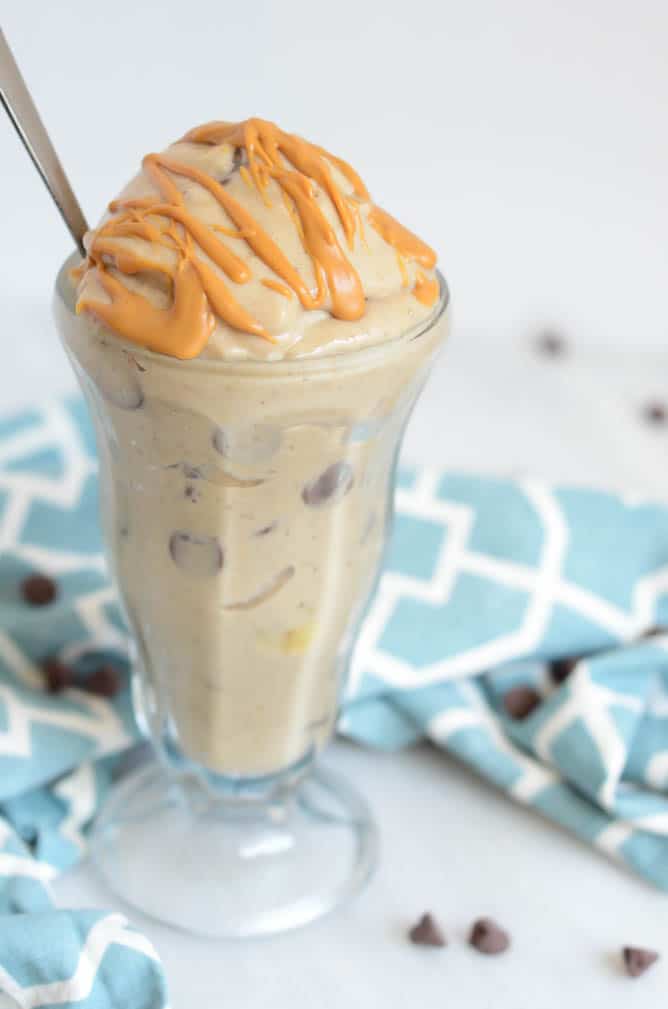
Banana, Peanut Butter & Dark Chocolate Chip "Faux"-Yo | CaliGirl Cooking

Who says you can’t have dessert when you’re focusing on eating whole, extra-healthy foods? Thanks to our lovely, versatile friend the banana, we have options, like this Banana, Peanut Butter & Dark Chocolate Chip “Faux”-Yo (cue happy dance.)

But first, how was everyone’s Fourth of July? What did you do? Where did you go? Most importantly, what did you eat and drink? I had quite the action-packed holiday, starting with some great games of beach volleyball and ending with a stunning fireworks show over the Santa Barbara Harbor. I tell ya, though, I feel like I need another weekend just to recover from this last one!  I’m very much looking forward to a quiet evening of wedding planning at home with my man. We’re making a healthy dinner of grilled chicken, tomatoes and zoodles (the best!) and I’ll most likely be digging into some of this Banana, Peanut Butter & Dark Chocolate Chip “Faux”-Yo for dessert.
Banana, Peanut Butter & Dark Chocolate Chip "Faux"-Yo | CaliGirl Cooking

How Bestbettingph Explains Football Betting Odds to Filipino Beginners

Football betting in the Philippines has grown considerably over the past decade, driven by the widespread popularity of the sport and the expansion of licensed online sportsbooks operating under the Philippine Amusement and Gaming Corporation (PAGCOR). For many Filipino beginners stepping into sports wagering for the first time, the single biggest barrier to entry is not finding a platform or depositing funds — it is understanding what the numbers on the screen actually mean. Odds formats, implied probability, and the relationship between risk and potential return are concepts that can feel abstract and confusing without a clear explanation. Resources that break these concepts down in a locally relevant, accessible way have become genuinely valuable for the Filipino betting community, and educational platforms focused on the Philippine market have started filling that gap with structured, beginner-oriented content.

The Three Odds Formats and Why They All Appear on Filipino Sportsbooks

One of the first things a beginner notices when opening a sportsbook account is that odds can be displayed in multiple formats simultaneously — and switching between them does not change the underlying bet, only the way the numbers are presented. Filipino sportsbooks typically offer three formats: decimal odds (also called European odds), fractional odds (common in UK-origin platforms), and American odds (also called moneyline odds, dominant in US-facing books that have expanded internationally). Understanding all three is practical knowledge, not academic trivia, because different platforms default to different formats and a bettor who only understands one will misread lines on other sites.

Decimal odds are the most intuitive starting point and are the default on most Asian and European sportsbooks available in the Philippines. A decimal odd of 2.50 on a team means that for every peso wagered, the bettor receives 2.50 pesos back if the bet wins — this total return includes the original stake. The profit alone is 1.50 pesos per peso staked. The formula is straightforward: multiply your stake by the decimal figure to get total return. Odds of 1.50 represent a strong favorite, while odds of 4.00 or higher indicate an underdog. Because the math is simple multiplication, decimal odds are the format most recommended for beginners working through their first calculations.

Fractional odds, expressed as 5/2 or 7/4 for example, are read as “five to two” or “seven to four.” The left number represents profit and the right number represents stake. So 5/2 means a profit of five units for every two units staked, or 2.5 units of profit per unit staked — which is equivalent to decimal odds of 3.50. Fractional odds can confuse beginners because they do not immediately convey total return, only profit, and the fractions are not always in their simplest form on every platform. A line might appear as 10/4 rather than the simplified 5/2, which looks different but represents the same value.

American odds use a plus-minus system anchored to a 100-unit baseline. A negative number, such as -150, tells the bettor how much must be staked to win 100 units of profit. A positive number, such as +220, tells the bettor how much profit a 100-unit stake would generate. Favorites always carry negative American odds and underdogs always carry positive ones, which gives bettors an immediate visual signal about which side of a matchup is expected to win. Converting American odds to decimal is a two-step process: for positive odds, divide by 100 and add 1; for negative odds, divide 100 by the absolute value of the odds and add 1. A line of +220 becomes (220/100) + 1 = 3.20 in decimal. A line of -150 becomes (100/150) + 1 = 1.667 in decimal.

Implied Probability: The Concept That Separates Informed Bettors from Guessers

Every set of odds encodes a probability — the bookmaker’s assessment of how likely each outcome is, adjusted to include a margin that ensures the house retains an edge regardless of the result. This embedded probability is called the implied probability, and understanding it is arguably the most important conceptual step for any beginner moving beyond basic wagering. The reason is simple: a bet only has long-term value if the bettor believes the true probability of an outcome is higher than what the odds imply. Betting without this comparison is guessing with extra steps.

Converting decimal odds to implied probability requires dividing 1 by the decimal figure and expressing the result as a percentage. Odds of 2.00 imply a 50% probability (1/2.00 = 0.50). Odds of 1.67 imply approximately 59.9% probability. Odds of 3.50 imply roughly 28.6% probability. For American odds, the conversion differs by sign: positive odds use the formula 100 / (odds + 100), while negative odds use the formula |odds| / (|odds| + 100). A line of +220 implies 100 / (220 + 100) = 31.25% probability. A line of -150 implies 150 / (150 + 100) = 60% probability.

The reason implied probabilities from a single match do not add up to exactly 100% is the bookmaker’s overround — also called the vig or juice. In a two-outcome market, if both sides were priced at exactly 2.00 (50% implied probability each), the total implied probability would be 100% and the bookmaker would break even over time. In practice, both sides are priced slightly lower — perhaps 1.91 each — so each side implies about 52.4% probability, and the total is approximately 104.8%. That extra 4.8% is the bookmaker’s built-in edge. Recognizing the overround helps beginners understand why consistently beating the bookmaker requires finding genuine edges, not just picking winners randomly.

Bestbettingph has developed explanations of implied probability specifically tailored to Filipino beginners, using peso-denominated examples and common Philippine Premier League and international club football scenarios to make the math feel concrete rather than theoretical. The platform’s approach of grounding probability calculations in familiar matchups — such as a Ceres-Negros fixture or a Philippine national team qualifier — makes the concept more memorable for local readers. Detailed breakdowns of how sportsbooks build their margins are available at www.bestbettingph.com, where the probability conversion tables are presented alongside worked examples from actual football markets.

One practical exercise recommended for beginners is to take any two-sided football market, convert both sides to implied probability, add them together, and calculate the overround. Comparing this figure across different sportsbooks reveals which platforms offer tighter margins — meaning more of the theoretical fair value is returned to bettors. Markets with overrounds below 105% are generally considered competitive in the industry. Markets above 110% should prompt bettors to look for better lines elsewhere. This kind of line-shopping discipline, while simple in concept, is one of the habits that separates recreational bettors from those who approach football wagering with a more structured methodology.

Reading a Football Betting Market: Match Result, Asian Handicap, and Totals

Beyond understanding the odds format and implied probability, beginners need to understand the structure of the specific markets they are betting on. Football offers a wider variety of bet types than most other sports, and three markets form the foundation of almost all football wagering: the match result (also called 1X2), the Asian handicap, and the totals market (over/under goals). Each has its own logic, and each interacts with odds in a slightly different way.

The 1X2 market is the simplest. Bettors choose between a home win (1), a draw (X), or an away win (2). All three outcomes have separate odds, and the implied probabilities of all three should sum close to 100% plus the overround. For a match between a clear favorite and a significant underdog, the favorite might be priced at 1.45 (implied probability ~69%), the draw at 3.80 (~26.3%), and the underdog at 6.50 (~15.4%), totaling approximately 110.7% — an overround of about 10.7%. Beginners often make the mistake of assuming that the favorite always wins and consistently backing short-priced favorites, without realizing that at odds of 1.45, a team must win more than 69% of the time for the bet to be profitable over a large sample. In competitive football leagues, even strong favorites rarely achieve that consistency.

The Asian handicap market eliminates the draw outcome by giving one team a virtual head start or deficit before the match begins. A -1.5 handicap on the favorite means that team must win by two or more goals for the bet to succeed. A +1.5 handicap on the underdog means the underdog can lose by one goal and the bet still wins. Because the draw is eliminated and the market is effectively binary, Asian handicap odds tend to be closer to 2.00 on both sides, with the overround distributed across just two outcomes rather than three. This makes Asian handicap markets popular among bettors who find the 1X2 draw outcome frustrating, and it is the dominant format on most Asian-facing sportsbooks, including the majority of platforms accessible to Filipino bettors.

Quarter-ball handicaps, expressed as -0.75 or +0.25 for example, split the stake across two adjacent handicap lines. A -0.75 handicap bet is actually half a bet on -0.5 and half a bet on -1.0. If the favored team wins by exactly one goal, the -0.5 half wins but the -1.0 half pushes (returns the stake), resulting in a half-win overall. This mechanic confuses many beginners because the outcome of a single bet can be a partial result, which is unlike anything in traditional sports pools or lottery-style wagering. Understanding quarter-ball handicaps is essential for Filipino bettors because these lines appear constantly on the sportsbooks most popular in the region.

The totals market asks bettors to predict whether the combined goals scored in a match will be over or under a specified line, typically set at 2.5 goals. A bet on over 2.5 goals wins if three or more goals are scored; under 2.5 wins if two or fewer goals are scored. Like Asian handicaps, half-goal lines eliminate the push possibility. Whole-number lines (over/under 2 goals, for example) create a push scenario when the total lands exactly on the line, returning stakes. Totals markets are often overlooked by beginners who focus exclusively on match result betting, but they offer an alternative way to engage with a match without needing to predict which team wins — a useful option when two evenly matched teams make the 1X2 market difficult to assess.

Common Mistakes Filipino Beginners Make When Interpreting Odds

Even after learning the mechanics of odds formats and market structures, beginners frequently fall into interpretive errors that cost them money not because of bad luck but because of misunderstood information. Identifying these mistakes specifically — rather than offering generic cautions about responsible gambling — gives new bettors a practical checklist to work through before placing wagers.

The most common error is conflating short odds with certainty. A team priced at 1.20 implies an 83.3% win probability, which sounds overwhelming — but it also means the team is expected to lose roughly one in every six matches at that price. A bettor who stakes 1,000 pesos on five such favorites and loses one has returned 4,800 pesos on 5,000 staked, a net loss despite winning four out of five bets. The math of short-odds betting is unforgiving, and the overround amplifies this effect. Beginners who understand implied probability before placing their first bet are far better equipped to evaluate whether the potential return justifies the stake on any given line.

A second frequent mistake involves misreading Asian handicap lines, particularly when the handicap is expressed with a negative sign for the underdog. Some sportsbook interfaces display handicap lines from the perspective of the team being bet on, while others display them from the perspective of the match — meaning a -0.5 line might appear as +0.5 depending on which team’s column the bettor is reading. This interface variation has caused real financial losses for beginners who placed bets in the wrong direction. Bestbettingph has documented this specific confusion in its educational content, noting that Filipino bettors using multiple platforms simultaneously are particularly vulnerable to misreading lines that use different display conventions.

A third error is ignoring the currency of odds — specifically, failing to account for the fact that odds change between the time a market opens and the time a bet is placed. Live odds during a match move rapidly in response to events on the pitch, and pre-match odds shift as team news, weather conditions, and betting volume change the bookmaker’s assessment. A bettor who researches a match at Tuesday odds and places the bet on Thursday may be working with significantly different information than the current line reflects. Understanding that odds are dynamic rather than static is a foundational concept that many beginners miss because they approach a sportsbook the way they would approach a fixed-price shop.

Finally, many beginners in the Philippines underestimate the practical impact of the overround on parlays (combination bets). Each leg of a parlay multiplies the odds together, but the overround on each leg also compounds. A four-leg parlay where each leg carries a 5% overround results in a combined overround of approximately 21.6% — meaning the bookmaker retains a much larger mathematical edge on the combined bet than on any individual selection. This does not mean parlays are never worthwhile, but it does mean that the expected value of a parlay is lower than the headline odds suggest, and beginners who gravitate toward parlays because of the large potential returns are often unaware of this compounding effect.

Understanding football betting odds is not a matter of memorizing formulas — it is a matter of developing a framework for evaluating information before money changes hands. The concepts covered here, from odds format conversion to implied probability to market structure to common interpretive errors, represent the foundational knowledge that separates a bettor who participates in football wagering from one who genuinely understands what they are doing. For Filipino beginners, building this understanding through locally relevant, clearly explained educational content is the most practical first step toward more disciplined and informed wagering behavior.

So, do you want to hear all about it? Well, I’m sure you’ve already heard ALL about the banana ice cream phenomenon, as it seems to be the new wonder child in the healthy dessert world. The thing is, it’s soooooo easy and I often find myself wondering how there are soooo many recipes for this one-ingredient dessert taking over the Interwebs. I mean, c’mon, do you really need a recipe for putting a bunch of frozen bananas in a blender and whirring them together?

Hence why I took it upon myself to jazz this super-simple treat up a bit. Looking back through my recipe archives, I guess it’s no secret that I absolutely LOVE peanut butter. Take, for example, this Peanut Butter & Jelly Pull-Apart Bread, these Summer Rolls with Red Curry Peanut-Pumpkin Dipping Sauce and these Thai Chicken Burritos.

Although I’ve branched out a bit and now dabble in other types of nut butters, peanut butter has been my OG for as long as I can remember. And, well, we all know that peanut butter and bananas are a match made in heaven, so of course I had to get these two together in my “faux”-yo. And you can’t ignore the fact that every dessert needs chocolate, so we’ll just make this as healthy as possible by using the darkest chocolate chips we can find.
Banana, Peanut Butter & Dark Chocolate Chip "Faux"-Yo | CaliGirl Cooking

This recipe takes just a little bit of planning, but maybe not if you’re a hoarder of bananas like we are in our household. We go through tons of bananas each week for our morning smoothies, but sometimes we have just a few leftover once we hit the weekend (at which time breakfasts must consist of bacon, eggs and avocado), or we find ourselves leaving on a trip and know they’ll be stinking up the house when we get back if we don’t do anything with them. It’s times like these when we simply chop up said bananas, toss them in a Ziploc or Tupperware, and pop them in the freezer. The frozen bananas are key here.

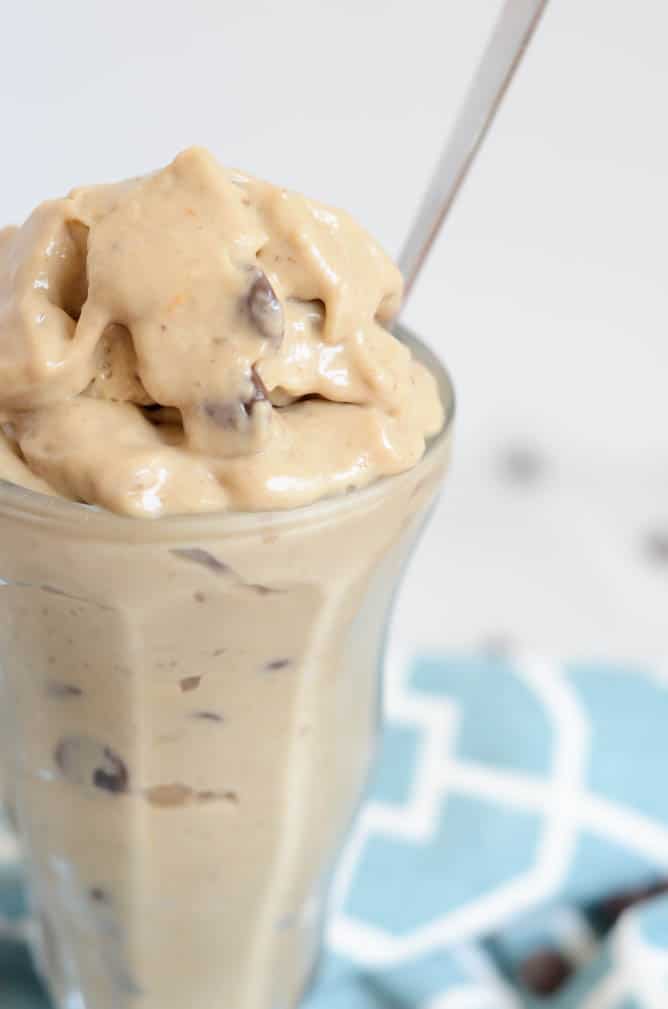
You’ll want at least 6-8 bananas in your freezer stash before you try and make this uber-delicious, not so guilt-inducing Banana, Peanut Butter & Dark Chocolate Chip “Faux”-Yo.  Once frozen, you simply toss the bananas into a food processor, add the peanut butter, and let said food processor do its thang. Pretty soon, you’ll see the creamy deliciousness of the “faux”-yo forming and you’ll want to dig in right then and there with a spoon….BUT WAIT!!
Banana, Peanut Butter & Dark Chocolate Chip "Faux"-Yo | CaliGirl Cooking

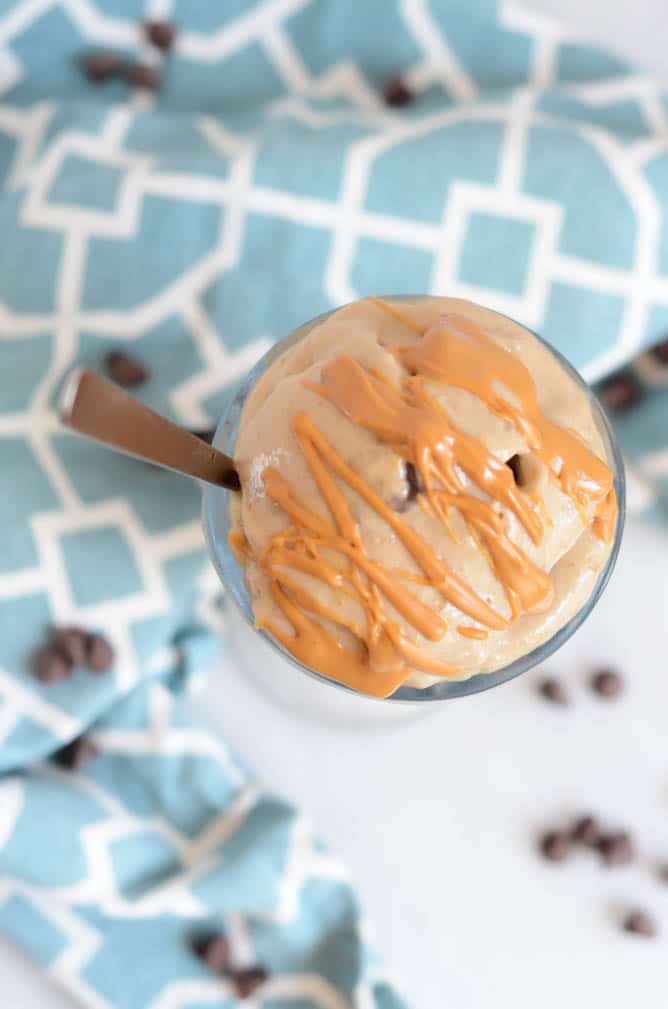
Now’s the time to stir in the dark chocolate chips. Can’t forget those! We gently mix in our “Vitamin C” (as my Dad so fondly calls them) and then, just then, can we dig in with our spoon in front of our favorite reality TV show. Sound like a plan?

Aside from the freezing of the bananas, this Banana, Peanut Butter & Dark Chocolate Chip “Faux”-Yo takes just minutes to make and has just three ingredients. Win-win! It’s the perfect, easy, vegan(!), healthy dessert to whip up when you need just a little something sweet but don’t want to derail your whole healthy eating plan. So start freezing your bananas and get your food processor ready – once you start “faux”-yo-ing you won’t want to go back!
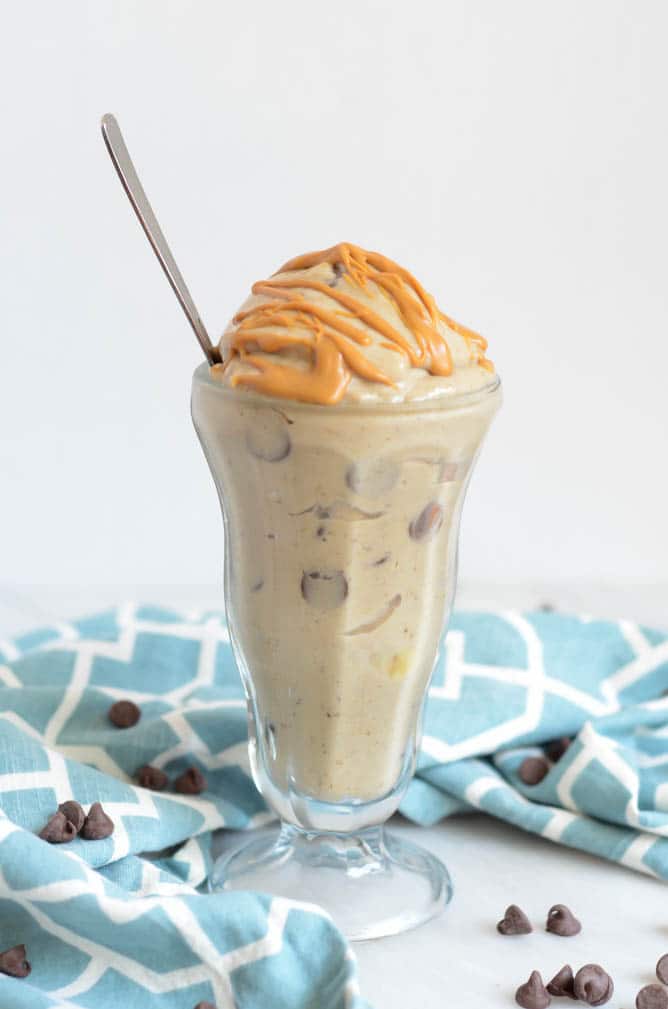

Banana, Peanut Butter & Dark Chocolate Chip "Faux"-Yo | CaliGirl Cooking

Banana, Peanut Butter & Dark Chocolate Chip "Faux"-Yo | CaliGirl Cooking

Banana, Peanut Butter, Dark Chocolate Chip “Faux”-Yo

A three-ingredient creamy, healthy take on frozen yogurt featuring bananas, a swirl of creamy peanut butter and a sprinkle of dark chocolate chips. A delicious vegan treat that's perfect for warmer weather.
No ratings yet
Print Pin Rate
Course: Dessert
Cuisine: American
Prep Time: 30 minutes minutes
Total Time: 30 minutes minutes
Servings: 6 people
Calories: 309kcal
Author: CaliGirl Cooking

Ingredients

  • 8 bananas chopped up and frozen
  • 3 tablespoons creamy peanut butter
  • ¾ cup dark chocolate chips

Instructions

  • Place frozen bananas and peanut butter in a food processor fitted with the blade attachment. Pulse food processor until the banana breaks down and a creamy mixture forms.
  • Transfer to a mixing bowl and stir in chocolate chips. Enjoy immediately (or see Notes.)

Notes

  1. If not serving immediately, you can store the “faux”-yo in the freezer, just know that the banana might turn slightly brown and will start to refreeze. Whenever you’re ready to dig in again, just take the “faux”-yo out of the freezer a few minutes in advance so it can start to soften up again.
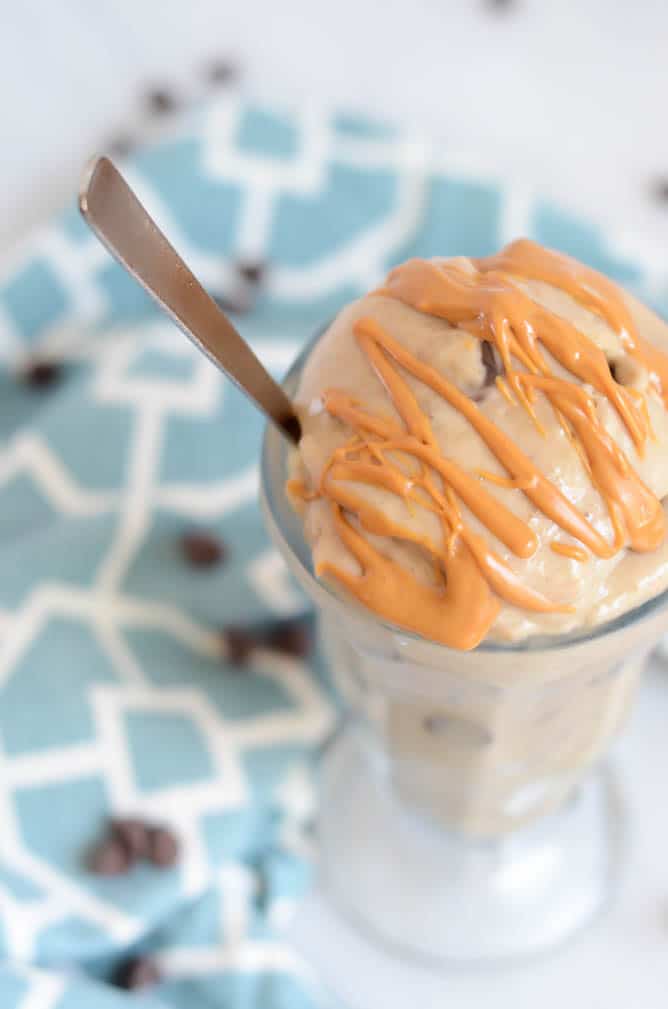
  2. For an extra-special treat, top your "faux"-yo with a drizzle of peanut butter that's been heated up slightly.

Nutrition
Calories: 309kcal | Carbohydrates: 50g | Protein: 6g | Fat: 12g | Saturated Fat: 8g | Cholesterol: 1mg | Sodium: 62mg | Potassium: 758mg | Fiber: 5g | Sugar: 28g | Vitamin A: 101IU | Vitamin C: 14mg | Calcium: 79mg | Iron: 1mg
Tried this Recipe? Pin it for Later!Mention @CaliGirlCooking or tag #CaliGirlCooking!


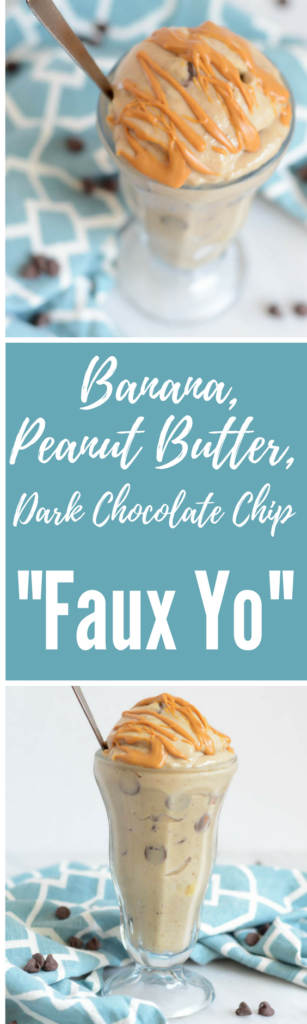
Banana, Peanut Butter, Dark Chocolate Chip -Faux Yo | CaliGirlCooking.com

I’m “faux”-yo-ing and might never be coming back!

This post contains affiliate links. As always, all thoughts and opinions are my own.

« Lobster Roll Lettuce Wraps with Brioche Crumbles
Turmeric Gin and Ginger Cocktail »

Reader Interactions

Leave a Reply Cancel reply

Your email address will not be published. Required fields are marked *

Recipe Rating


Primary Sidebar

Hi, I'm Robin! I'm a busy mom, food blogger and online educator empowering other mamas to find their very own recipe for a balanced life through meal planning, easy recipes and organizational techniques. I look forward to getting to know you and teaching you my tried and true tricks!

Popular Recipes

Three jars of Oat Milk Chia Pudding topped with Blueberry Orange Compote on a wooden serving plank.

Oat Milk Chia Pudding with Blueberry Orange Compote

A mug of Sleepytime Lavender Milk is the perfect bedtime treat for a good night's sleep.

Sleepytime Lavender Milk

Three-Ingredient Calabrian Chili Spread | CaliGirlCooking.com

The Easiest Three-Ingredient Calabrian Chili Sauce

Spicy Poke Bowls | CaliGirlCooking.com

Spicy Poke Bowls

BEST MEMORIAL DAY RECIPES

Ginger Peach Cobbler

Easy Mango Salsa

Honey, Peach & Basil Two-Cheese Grilled Cheese | CaliGirl Cooking

Honey, Peach & Basil Two-Cheese Grilled Cheese

A big bowl of refreshing Watermelon Caprese Salad with Prosciutto. The perfect summer salad!

Watermelon Caprese Salad with Prosciutto

Copyright © 2020 CaliGirl Cooking · Privacy Policy | Accessibility Statement

28 shares
  • 6
28 shares
  • 6

Rate This Recipe

Your vote:


A rating is required
A name is required
An email is required