• Skip to main content
  • Skip to primary sidebar
CaliGirl Cooking
menu icon
go to homepage
search icon
Homepage link
  • Home
  • About
  • Recipes
  • Kids & Baby
  • Shop My Amazon Store
  • Contact
×
Home » Bread » Loaded Skillet Cornbread with Sausage and Cheddar Cheese

Loaded Skillet Cornbread with Sausage and Cheddar Cheese

Published February 1, 2017 | Updated Jul 10, 2026 by Robin Deem Leave a Comment
This post may contain affiliate links. Please read my disclosure.

Jump to Recipe Print Recipe

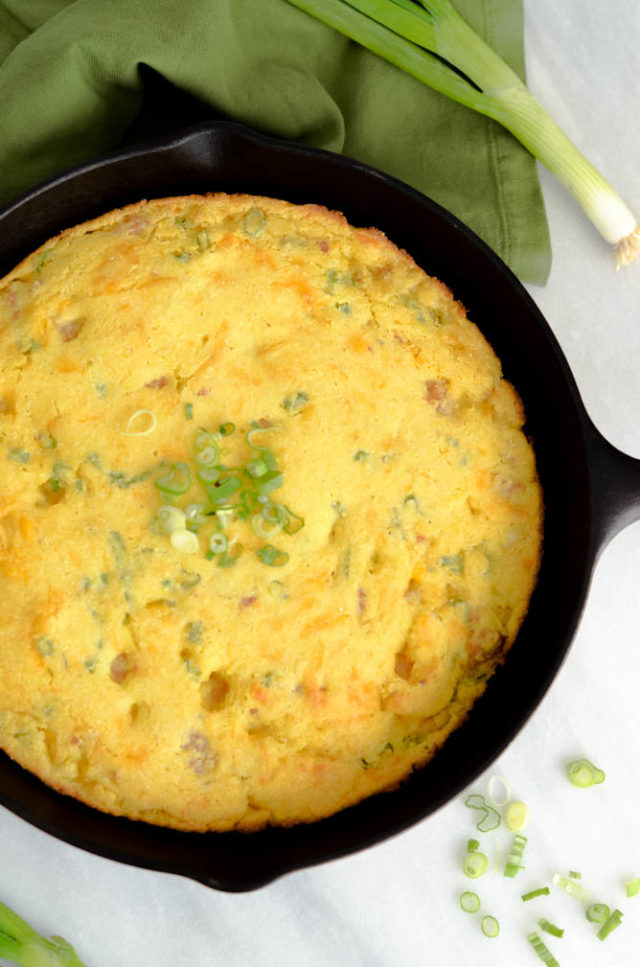
Cornbread gets a delicious makeover when it’s loaded with sausage, green onions and shredded cheddar cheese and cooked in a seasoned cast iron skillet. 

Loaded Skillet Cornbread with Sausage and Cheddar Cheese | CaliGirlCooking.com

I promised to balance out all that healthy stuff I brought you on Monday, didn’t I? Well, let me tell you, this Loaded Skillet Cornbread with Sausage and Cheddar Cheese truly delivers. We are, after all, in the season of comfort food (and Super Bowl Sunday!) so there’s no time like the present to indulge just a little bit. Plus, we’ve got to bake allllll of the things before the weather once again gets too warm for us to even think about turning on the oven.

As I was dreaming up this recipe, I originally thought I’d just make my loaded cornbread in a classic glass baking dish and serve it up in thick, hearty squares. But then, as I was putting away dishes and reorganizing all of my pots and pans, my eyes fell upon my extremely neglected cast iron skillet and I knew this would be the perfect opportunity to give it some lovin’.

Loaded Skillet Cornbread with Sausage and Cheddar Cheese | CaliGirlCooking.com

The last time I used my trusty Lodge cast iron skillet for a recipe on this site was way back in April of last year, when I brought you this incredibly delicious (and still a reader favorite) Greek Skillet. It turned out so well, and has continued to serve me well in times of easy, healthy dinner needs, that I’m not sure what has taken me so long to break the skillet out again and put it to good use. Now that I’ve done it, I’m eager to start trying even more cast iron skillet recipes in the very near future…Do you have any suggestions of recipes I should try??

Not only is this Loaded Skillet Cornbread with Sausage and Cheddar Cheese incredibly decadent and drool-worthy, it’s also soooo easy to make. Yes, the batter is made from scratch, but I kid you not when I say it comes together in less than 15 minutes flat. With only 20 minutes of baking time, the cornbread would be a welcome addition to an easy weeknight dinner. I’m thinking it would be the perfect accompaniment to a bowl of Warming Minestrone Soup or a big Winter Kale Salad.

Loaded Skillet Cornbread with Sausage and Cheddar Cheese | CaliGirlCooking.com

Oh, and did I mention we grease the pan with bacon fat? I know, I know, it sounds indulgent, but I’m really just jumping on the “no waste” cooking trend that’s predicted to be a huge trend in the world of food in 2017. I don’t know about you, but the hubs and I have a huge Mason jar full of bacon grease leftover from our weekend breakfasts, and prefer to put it to tasty use as opposed to having to discard of it in an old tomato sauce can. That being said, if it sounds just a bit TOO indulgent for you, you could always use butter (just know that you’ll be missing out on some delicious bacon-y flavor in this already indulgent dish!)

How CasinosMinimumDeposit Explains Low Deposit Thresholds in New Zealand

New Zealand’s online gambling market has undergone significant structural changes over the past decade, and one of the more telling indicators of that shift is the widespread adoption of low minimum deposit thresholds at offshore-licensed casinos. Where players once had to commit NZD 20 to NZD 50 just to activate an account, many platforms now accept initial deposits as low as NZD 1 or NZD 5. This is not simply a marketing gimmick — it reflects a confluence of payment technology evolution, regulatory arbitrage, and competitive pressure from a market that, despite its relatively small population of roughly 5.1 million people, generates substantial gambling revenue. Understanding why these thresholds exist, how they are structured, and what they mean for New Zealand players requires looking at the mechanics of the industry rather than its surface-level promotions.

The Regulatory Context That Makes Low Deposits Possible in New Zealand

New Zealand’s domestic gambling framework is governed primarily by the Gambling Act 2003, which prohibits the operation of online casino services by New Zealand-based entities but does not explicitly criminalize participation by individual players at offshore sites. This legal ambiguity — sometimes called the “player exemption” — has created a market where dozens of international operators, licensed in jurisdictions such as Malta (under the Malta Gaming Authority), Gibraltar, Curaçao, and the Isle of Man, actively target New Zealand residents without operating under any domestic oversight. The Department of Internal Affairs (DIA) has acknowledged this gap but has not moved to close it through the kind of comprehensive licensing regime seen in Australia under the Interactive Gambling Act 2001.

This regulatory vacuum has direct consequences for deposit thresholds. Because offshore operators are not subject to New Zealand’s consumer protection requirements or the Responsible Gambling Trust’s framework in the same way domestic venues are, they have considerably more latitude in how they structure account minimums. A casino licensed in Curaçao, for instance, faces none of the mandatory pre-commitment requirements that apply to New Zealand’s land-based TAB and casino operators. The result is that these platforms can set minimum deposits based purely on business logic: attract the widest possible pool of depositing players, reduce friction at the point of first commitment, and then monetize through game margins and bonus wagering requirements over time.

It is also worth noting that New Zealand’s Banking Ombudsman and the Financial Markets Authority (FMA) have limited jurisdiction over transactions processed through offshore payment intermediaries. When a New Zealand player deposits NZD 5 through a cryptocurrency wallet or an e-wallet like Skrill or Neteller, that transaction may not be subject to the same anti-money laundering scrutiny that would apply to a domestic bank transfer above certain thresholds. This does not mean the transactions are unregulated at the payment processor level — Skrill and Neteller are both regulated by the UK’s Financial Conduct Authority — but it does mean the casino itself can accept very small amounts without triggering the same compliance overhead that would accompany larger domestic financial transactions.

How CasinosMinimumDeposit Analyzes the NZD 1 and NZD 5 Deposit Categories

The emergence of NZD 1 and NZD 5 minimum deposit casinos as a distinct product category reflects something more than operator generosity. These thresholds are engineered around the economics of player acquisition and retention. A platform that accepts NZD 1 deposits is essentially removing the financial barrier to entry entirely — at that price point, the decision to deposit is psychologically equivalent to a small discretionary purchase, not a financial commitment that requires deliberation. The conversion rate from registered user to first depositor increases substantially when the threshold drops below NZD 10, which is why operators in competitive markets like New Zealand have progressively lowered their floors over the 2018–2024 period.

Research aggregated by casino comparison platforms — including the data catalogued at http://casinos-minimum-deposit.com, where deposit tier structures across multiple jurisdictions are documented — shows that the NZD 5 threshold has become something of an industry standard for mid-tier offshore operators targeting Oceania, while NZD 1 casinos remain a smaller subset typically associated with cryptocurrency-first platforms or those using Paysafecard as a primary payment method. The distinction matters because the underlying payment infrastructure determines what minimums are economically viable. Credit card processors typically impose per-transaction fees that make NZD 1 deposits unprofitable for operators, whereas cryptocurrency networks and prepaid voucher systems have fee structures that can accommodate micro-transactions.

CasinosMinimumDeposit has documented a pattern across New Zealand-facing platforms where the stated minimum deposit and the effective minimum deposit diverge. A casino might advertise a NZD 1 minimum but apply that threshold only to deposits made via Bitcoin or Litecoin, while requiring NZD 20 or more for Visa and Mastercard transactions. This tiered structure is a direct response to interchange fees and chargeback risk — card networks charge operators between 1.5% and 3.5% per transaction plus a fixed fee, which makes small card deposits economically unviable. E-wallets occupy a middle ground, with Neteller and Skrill typically enabling NZD 5 minimums due to their lower per-transaction costs and reduced chargeback exposure compared to card payments.

The bonus architecture surrounding low deposit thresholds is equally instructive. Most NZD 5 deposit casinos do not offer the same welcome bonus percentages on minimum deposits that they advertise for larger initial deposits. A 100% match bonus might apply to deposits of NZD 20 and above, while a NZD 5 deposit earns a flat NZD 5 bonus or a small number of free spins. This is deliberate — operators use the low threshold to acquire depositors, then structure incentives to encourage players to increase their deposit amounts in subsequent sessions. The wagering requirements attached to these bonuses, typically ranging from 30x to 50x the bonus amount, also serve to extend player engagement well beyond the initial deposit event.

Payment Methods and Their Role in Shaping Deposit Floors

The payment landscape available to New Zealand players has expanded considerably since the early 2010s, and this expansion is the single most important technical driver of declining minimum deposit thresholds. In 2012 or 2013, the practical options for funding an offshore casino account from New Zealand were limited to credit cards, bank transfers, and a handful of e-wallets with limited local support. Each of these methods carried meaningful per-transaction costs that made sub-NZD 20 deposits economically marginal for operators.

The introduction of Paysafecard as a widely accepted payment method for New Zealand players around 2015–2016 changed the calculus significantly. Paysafecard vouchers are available in NZD denominations as low as NZD 10 at retail outlets across New Zealand, and their prepaid nature eliminates chargeback risk entirely from the operator’s perspective. This made NZD 10 deposits genuinely viable for a broader range of platforms. The subsequent adoption of cryptocurrency payments — Bitcoin became accepted at a meaningful number of New Zealand-facing casinos between 2017 and 2019, with Ethereum and Litecoin following shortly after — pushed the floor even lower. Cryptocurrency transactions carry network fees that, outside of periods of extreme congestion, are typically well below NZD 1, making NZD 1 or even sub-dollar deposits technically feasible.

By 2022 and 2023, the integration of instant banking solutions such as POLi (which allows direct bank transfers without sharing card details) and the broader adoption of open banking APIs began offering another pathway for low-cost transactions. POLi in particular has been adopted by several New Zealand-facing operators as a way to offer bank-level security with lower processing costs than card networks, enabling NZD 10 minimums with greater reliability than card-based alternatives. The Reserve Bank of New Zealand’s work on payment system modernization, including consultations on a real-time payments infrastructure, suggests that transaction costs for small-value payments will continue to decline, which will likely push minimum deposit thresholds further down over the next several years.

It is also worth examining the role of Know Your Customer (KYC) requirements in shaping deposit minimums. Under anti-money laundering frameworks applicable to licensed gambling operators — including those licensed in Malta under the Fourth and Fifth EU Anti-Money Laundering Directives — enhanced due diligence is typically triggered at deposit thresholds of EUR 2,000 or equivalent, with lighter-touch verification applying below that level. For New Zealand players depositing small amounts, this means that NZD 5 or NZD 10 deposits often require only basic registration details rather than full document verification. Operators have recognized that reducing the friction of the verification process for small depositors increases conversion rates, which reinforces the commercial logic of maintaining low deposit floors.

What Low Thresholds Mean for Responsible Gambling in New Zealand

The accessibility created by NZD 1 and NZD 5 deposit thresholds carries a dual character that responsible gambling researchers have begun to examine more carefully. On one hand, low minimums allow players with limited budgets to participate without overcommitting financially, which aligns with harm minimization principles promoted by the Problem Gambling Foundation of New Zealand and the Gambling Helpline (0800 654 655). A player who deposits NZD 5 and loses it has experienced a contained financial outcome, and the low threshold may actually discourage the kind of large, impulsive deposits that characterize problematic gambling episodes.

On the other hand, the same accessibility that limits individual session losses can increase the frequency of gambling participation. Research published in journals including the Journal of Gambling Studies has consistently found that accessibility — measured by proximity, availability, and now financial entry cost — is one of the strongest predictors of gambling participation rates in a population. When the decision to deposit requires the same cognitive effort as buying a coffee, the behavioral barrier to initiating a gambling session is effectively eliminated. For individuals with pre-existing vulnerability to gambling disorder, this frictionlessness can accelerate the progression from recreational play to problematic patterns.

CasinosMinimumDeposit and similar comparison resources have a role to play here that extends beyond simply cataloguing deposit tiers. When these platforms include information about responsible gambling tools — deposit limits, session time limits, self-exclusion mechanisms — alongside deposit threshold data, they contribute to a more informed player population. The New Zealand Gambling Commission’s 2019 review of online gambling noted that player-facing information about responsible gambling tools at offshore sites was inconsistent and often difficult to locate, which suggests that third-party aggregators providing this information in accessible formats serve a genuine public interest function.

The question of whether New Zealand will eventually move toward a licensing regime for offshore operators — similar to the model adopted by Denmark in 2012, Sweden in 2019, or the Netherlands in 2021 — remains open. A licensed domestic framework would almost certainly impose minimum deposit requirements as part of responsible gambling conditions, potentially setting floors higher than the NZD 1 currently available at some platforms. It would also require operators to contribute to problem gambling funding, implement mandatory pre-commitment tools, and submit to regular audits. Whether such a regime would ultimately benefit New Zealand players depends on how it is structured, but the trend in comparable markets suggests that licensing tends to improve consumer protection outcomes while also formalizing the tax contribution of a sector that currently generates revenue largely outside the New Zealand fiscal system.

The landscape of minimum deposit thresholds at New Zealand-facing online casinos is ultimately a product of intersecting forces: a regulatory framework that leaves offshore operators largely unencumbered by domestic requirements, payment technology that has made micro-transactions economically viable, competitive pressure among operators for player acquisition, and a player base that has become increasingly sophisticated in its understanding of how deposit structures and bonus terms interact. The NZD 1 or NZD 5 minimum is not a standalone feature — it is an entry point into a carefully designed commercial ecosystem. Players who understand the mechanics behind these thresholds, including the payment method dependencies, the bonus architecture, and the responsible gambling implications, are better positioned to engage with these platforms on their own terms rather than on terms set entirely by operators. As payment infrastructure continues to evolve and regulatory conversations in New Zealand mature, the minimum deposit landscape will continue to shift — and tracking those shifts requires the kind of systematic, data-driven approach that dedicated comparison resources have increasingly provided to the New Zealand market.

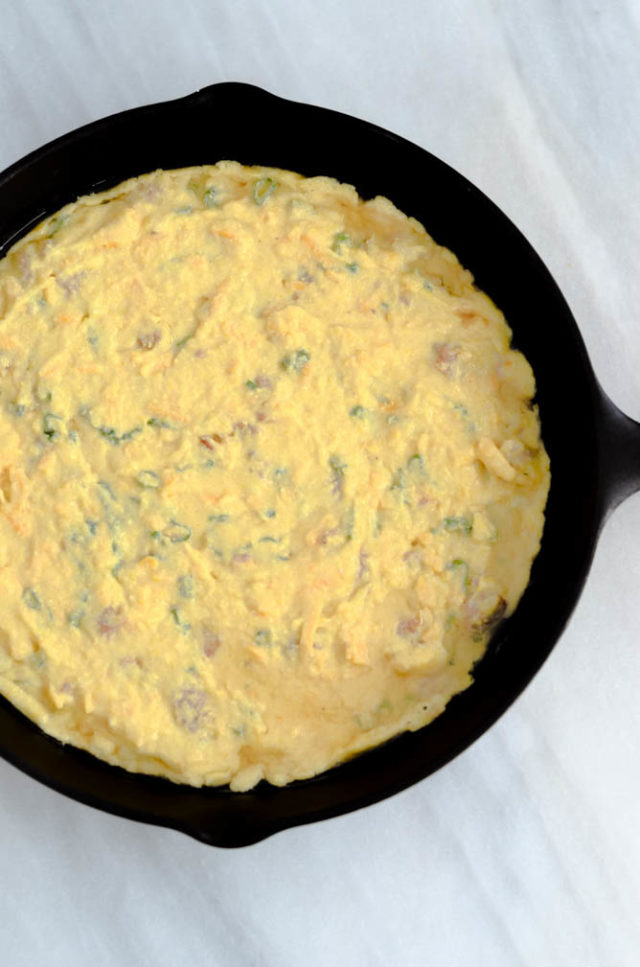
The only prep that you’ll need to do in preparation for this deliciousness is to cook up some Italian sausage, grate some cheddar cheese and slice some green onions. Once that’s all done, the batter will come together in no time flat, while your cast iron skillet is busy warming up (and getting seasoned with bacon grease) in the preheating oven.

Loaded Skillet Cornbread with Sausage and Cheddar Cheese | CaliGirlCooking.com

If you’re looking for an easy dish that will “wow” your guests for Super Bowl Sunday, this Loaded Skillet Cornbread with Sausage and Cheddar Cheese is your answer. It might as well be deemed a “meal” with all of that protein from the sausage and cheese, and there’s even some “green stuff” hanging out in there. I might also add that it’s incredibly tasty with a little drizzle of honey over top, or if you REALLY want to be indulgent, slather on some creamy, high-quality butter.

Loaded Skillet Cornbread with Sausage and Cheddar Cheese | CaliGirlCooking.com

So now you have a healthy dish and this indulgent dish for your football-noshing pleasure this weekend. How about on Friday I bring you a cocktail??

Happy humpday friends!

Loaded Skillet Cornbread with Sausage and Cheddar Cheese | CaliGirlCooking.com

Loaded Skillet Cornbread with Sausage and Cheddar Cheese

Cornbread gets a delicious makeover when it's loaded with sausage, green onions and shredded cheddar cheese and cooked in a seasoned cast iron skillet.

No ratings yet
Print Pin Rate
Course: Side Dish
Cuisine: American, Cajun
Prep Time: 20 minutes minutes
Cook Time: 20 minutes minutes
Total Time: 40 minutes minutes
Servings: 8 servings
Calories: 410kcal
Author: CaliGirl Cooking

Ingredients

  • 2 tablespoons bacon fat
  • 6-7 ounces sweet Italian sausage, casings removed (about 2 links)
  • 1 1/2 cups cornmeal
  • 1/2 cup flour
  • 1/4 cup sugar
  • 1 teaspoon salt
  • 1/2 teaspoon baking soda
  • 1 1/3 cup buttermilk
  • 2 eggs
  • 2 tablespoons butter, melted
  • 1 large green onion, minced
  • 1 1/4 cups grated cheddar cheese

Instructions

  • Preheat oven to 425 degrees Fahrenheit. Place bacon grease in a 12-inch cast iron skillet and place in oven as it is preheating. 
  • In a small nonstick skillet, brown the sausage, then set aside. 
  • In a large mixing bowl, whisk together the cornmeal, flour, sugar, salt and baking soda. 
  • Add the buttermilk, eggs and butter to the same mixing bowl and whisk until combined. 
  • Stir in the cooked sausage, green onions and cheddar cheese. 
  • Using potholder, remove the cast iron skillet from the oven. Pour in the batter and then return to the oven for 20 minutes. Remove when a cake tester inserted into the center comes out clean. Let cool slightly before serving.

Notes

This recipe should also work fine if you only have a 9-inch cast iron skillet. The bread will turn out a little thicker, so you will probably need to increase the baking time 5-10 minutes.

Nutrition

Calories: 410kcal | Carbohydrates: 37g | Protein: 14g | Fat: 23g | Saturated Fat: 11g | Cholesterol: 91mg | Sodium: 714mg | Potassium: 253mg | Fiber: 3g | Sugar: 9g | Vitamin A: 421IU | Vitamin C: 1mg | Calcium: 187mg | Iron: 2mg
Tried this Recipe? Pin it for Later!Mention @CaliGirlCooking or tag #CaliGirlCooking!

This post contains affiliate links. As always, all thoughts and opinions are my own. Thank you for continuing to support the brands that make CaliGirl Cooking possible!

Loaded Skillet Cornbread with Sausage and Cheddar Cheese | CaliGirlCooking.com

« Best EVER Winter Vegetable Platter
Pineapple, Fennel and Lychee Shrub »

Reader Interactions

Leave a Reply Cancel reply

Your email address will not be published. Required fields are marked *

Recipe Rating


Primary Sidebar

Hi, I'm Robin! I'm a busy mom, food blogger and online educator empowering other mamas to find their very own recipe for a balanced life through meal planning, easy recipes and organizational techniques. I look forward to getting to know you and teaching you my tried and true tricks!

Popular Recipes

Three jars of Oat Milk Chia Pudding topped with Blueberry Orange Compote on a wooden serving plank.

Oat Milk Chia Pudding with Blueberry Orange Compote

A mug of Sleepytime Lavender Milk is the perfect bedtime treat for a good night's sleep.

Sleepytime Lavender Milk

Three-Ingredient Calabrian Chili Spread | CaliGirlCooking.com

The Easiest Three-Ingredient Calabrian Chili Sauce

Spicy Poke Bowls | CaliGirlCooking.com

Spicy Poke Bowls

BEST MEMORIAL DAY RECIPES

Ginger Peach Cobbler

Easy Mango Salsa

Honey, Peach & Basil Two-Cheese Grilled Cheese | CaliGirl Cooking

Honey, Peach & Basil Two-Cheese Grilled Cheese

A big bowl of refreshing Watermelon Caprese Salad with Prosciutto. The perfect summer salad!

Watermelon Caprese Salad with Prosciutto

Copyright © 2020 CaliGirl Cooking · Privacy Policy | Accessibility Statement

59 shares
  • 2
59 shares
  • 2

Rate This Recipe

Your vote:


A rating is required
A name is required
An email is required